Landing pages exist for a single reason: conversion. Unlike full websites that contain multiple navigation paths, informational pages, and exploratory content, landing pages are purpose-built environments. Their role is simple — guide users toward one specific action.
That action could be signing up for a service, requesting a demo, downloading a resource, or making a purchase. Regardless of the goal, a successful landing page removes distractions and focuses attention on the outcome.
In digital marketing campaigns, landing pages are often the critical link between traffic and results. You may invest significant resources into advertising, SEO, or social media campaigns to attract visitors. However, if the landing page fails to communicate value clearly and guide users toward action, that traffic will rarely convert.
High-impact landing pages do not happen by chance. They are designed deliberately around clarity, alignment with user intent, and trust-building elements that reduce hesitation.
The Business Case: What You Stand to Lose
When landing pages are poorly structured or unfocused, the consequences can be significant.
Common outcomes include:
Low campaign return on investment when visitors fail to convert
High drop-off rates as users abandon the page quickly
Unclear messaging that leaves users unsure of the value being offered
Wasted advertising spend due to misaligned expectations
Reduced credibility when the experience does not match the campaign promise
A landing page represents the moment where marketing efforts either succeed or fail. If the page does not align with the expectations set by advertisements or campaigns, users immediately experience friction.
In digital environments where users make decisions quickly, even small mismatches between expectation and experience can lead to abandonment.
Designing High-Converting Landing Pages
Creating effective landing pages requires a focused design approach. Every element should support the single objective of guiding users toward conversion.
1. Align Message With User Intent
One of the most important factors in landing page performance is message alignment.
When a user clicks on an advertisement, email link, or social media promotion, they arrive with a specific expectation. The landing page must immediately confirm that expectation.
Your headline should reflect the same promise or value proposition presented in the campaign that brought the visitor there. If users encounter messaging that feels unrelated or inconsistent, they quickly lose confidence and leave.
Alignment between campaign messaging and landing page content reduces confusion and builds trust from the first moment of interaction.
2. Keep Content Focused
Landing pages should eliminate unnecessary navigation and distractions.
Unlike traditional websites, which often encourage exploration, landing pages are designed for a single outcome. Including multiple navigation links or unrelated content can dilute the user’s attention and weaken the conversion path.
Each section of the page should reinforce the primary message and guide users closer to the desired action.
For example, content might include:
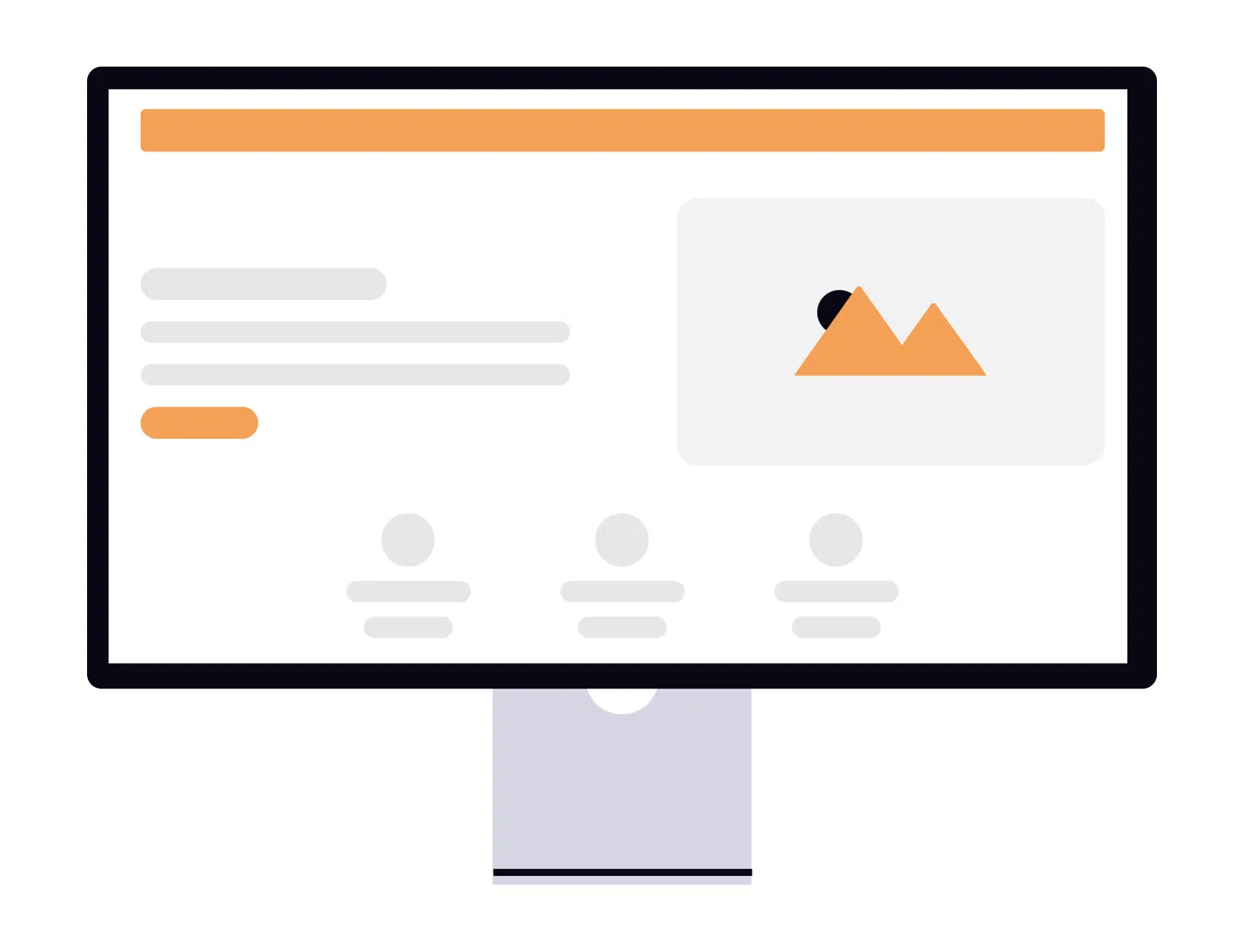
A clear headline explaining the value proposition
Supporting sections that highlight benefits or key features
Visual elements that demonstrate the product or service
Testimonials or social proof that strengthen credibility
A strong call-to-action that invites the user to proceed
When every element supports the same goal, the user journey becomes intuitive and frictionless.
3. Build Trust Quickly
Trust is a critical component of conversion. Users rarely commit to an action unless they feel confident in the credibility of the business or offer.
Landing pages must establish trust early in the experience.
This can be achieved through elements such as:
Customer testimonials that demonstrate real-world results
Client logos or partnerships that signal authority
Guarantees that reduce perceived risk
Clear contact information that reassures users the company is legitimate
Placing trust-building elements near calls-to-action is particularly effective. When users encounter reassurance at the moment they are considering conversion, hesitation decreases significantly.
Trust removes barriers to action.
4. Make Calls-to-Action Stand Out
Calls-to-action (CTAs) represent the final step in the conversion journey.
Effective CTAs should be visually distinct and easy to locate. Designers often use colour contrast, whitespace, and strategic placement to ensure the CTA stands out from surrounding elements.
Equally important is the language used within the CTA. Action-oriented phrases such as “Get Started,” “Download the Guide,” or “Book Your Consultation” clearly communicate the next step.
Vague labels such as “Submit” or “Click Here” lack clarity and may reduce motivation.
The CTA should feel like a natural continuation of the page’s narrative rather than an abrupt request.
5. Reduce Friction in the Conversion Process
Even when users are interested in an offer, unnecessary friction can discourage them from completing the action.
Complex forms, excessive data requests, or unclear instructions can cause abandonment.
To reduce friction, landing pages should:
Keep forms short and focused
Ask only for essential information
Provide clear instructions or progress indicators
Ensure fast loading speeds and mobile compatibility
The easier it is for users to complete the action, the higher the likelihood of conversion
Focus Increases Performance
Landing pages perform best when they remain focused.
By eliminating distractions, aligning messaging with user expectations, and reinforcing trust, designers create environments where users can quickly understand the offer and act confidently.
Clarity simplifies decision-making.
The more direct the path to conversion, the more likely users are to follow it.
Design With One Goal in Mind
Unlike multi-page websites that serve multiple purposes, landing pages succeed by pursuing a single objective.
Every design choice, piece of content, and visual element should support that goal.
A focused page converts better than a busy one.
When users understand the offer immediately and encounter minimal friction along the path, conversion becomes a natural outcome rather than a forced one.
Landing pages are not simply web pages. They are strategic tools that transform attention into measurable results.