
In today’s competitive digital marketplace, online visibility is everything. But visibility doesn’t come from SEO alone—it’s the result of a powerful, integrated approach combining web design, development, and search engine optimization (SEO).
When these three pillars work together from the start, the result isn’t just a beautiful website or high rankings—it’s a seamless user experience (UX) that attracts traffic, builds trust, and drives measurable business growth.
1. Web Design: Crafting the First Impression and Enhancing UX
A visually compelling website captures attention and builds instant credibility—but modern web design goes far beyond appearance. It’s the foundation for strong user engagement and effective SEO.
How Web Design Supports SEO:
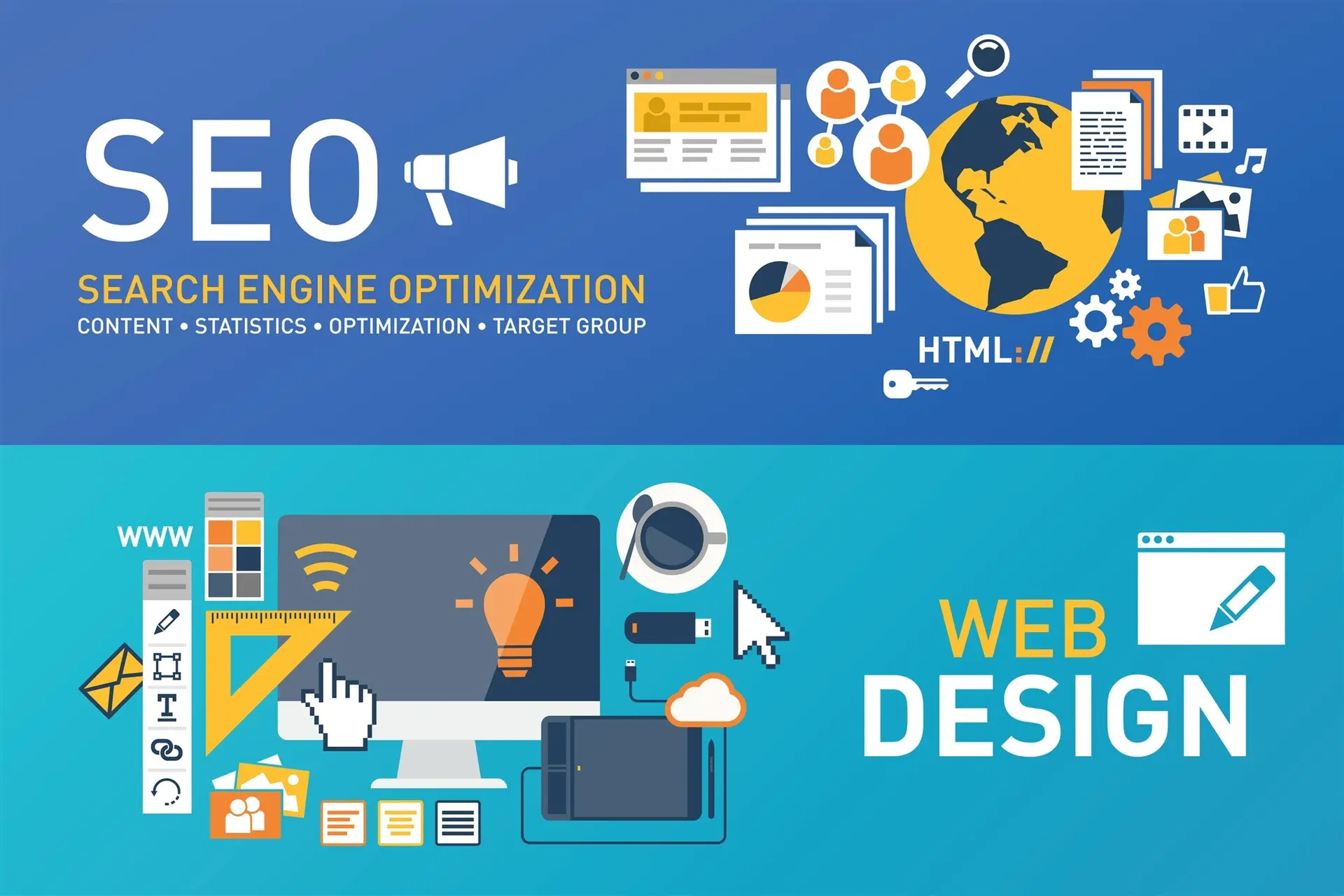
- User Experience (UX): Clean layouts, intuitive navigation, and scannable content improve dwell time and reduce bounce rates—both of which are behavioral signals that influence search rankings.
- Mobile Optimization: A responsive website design ensures functionality and aesthetic consistency across all devices, directly improving mobile SEO performance.
- Web Accessibility: Inclusive design elements like alt text, proper color contrast, and legible typography not only improve usability but also boost your site’s SEO compliance.
Pro Tip: A site that looks great but is hard to navigate will drive users away—and drag down your conversion rates and SEO metrics.
2. Web Development: Building the Technical SEO Foundation
Behind every successful website is strong web development. It ensures that your site is fast, secure, and built on clean, crawlable code—essentials for both users and search engines.
How Development Enhances SEO:
- Site Speed Optimization: Google uses page speed as a ranking factor. Developers reduce load times by optimizing code, compressing media files, and using efficient frameworks.
- Semantic HTML & Clean Code: Proper use of HTML5 elements, header hierarchy (H1–H6), and structured data markup enhances how search engines interpret your content.
- Secure Infrastructure (HTTPS): A secure connection is a trust factor for users and a baseline SEO requirement in 2025.
- Schema Markup Integration: Developers implement structured data to help search engines understand your content context and increase chances for rich results.
Watch Out: Weak development can lead to slow load times, mobile rendering issues, crawl errors, and poor indexation—all of which negatively impact SEO performance.
3. SEO: Making Your Website Discoverable and Competitive
Search engine optimization is what bridges the gap between your website and your audience. It’s the engine that drives visibility and ensures all your design and development efforts translate into real results.
Core SEO Responsibilities:
- Keyword Research & Strategy: Identifies high-intent keywords your audience is searching for and guides content creation, URL structure, and internal linking.
- On-Page Optimization: Ensures proper use of meta titles, meta descriptions, heading tags, image optimization, and internal linking—all aligned with user intent.
- Technical SEO: Collaborates with developers to improve crawlability, indexation, and site architecture for long-term scalability.
- Analytics & SEO Reporting: Tracks performance through tools like Google Analytics and Search Console to measure traffic, rankings, and conversion performance.
Bottom Line: SEO ensures your content is visible to the right people at the right time—and that your site meets both user needs and search engine criteria.
Why Integration Matters More Than Ever in 2025
With the rise of AI-powered search engines, voice search, and increasingly high user expectations, businesses can no longer afford to treat web design, development, and SEO as siloed disciplines.
An integrated approach ensures:
- Higher search engine visibility
- Increased organic website traffic
- Stronger conversion rates
- Enhanced brand trust and authority
- A future-proof digital presence that adapts with evolving trends and technologies
Final Thoughts: Unified Strategy = Real Performance
In 2025, a successful website isn’t built through isolated efforts. Web design, front-end development, and SEO must work together from the start to create a cohesive, high-performance digital platform.
If your website isn’t performing as expected, it might not be a problem with SEO alone—it could be a design bottleneck, a development issue, or a lack of alignment between all three.
Real results come from an integrated strategy, not quick fixes. To build a high-converting, search-optimized website, you need collaboration between UX designers, developers, and SEO specialists—from planning through launch and beyond.